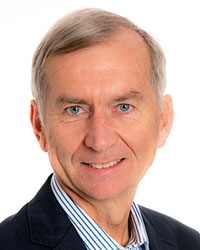
A/Prof Alan Fraser
Gastroenterologist
09 630 1838
Auckland Region
Electronic Referral on Specialists & Referrals Service
Southern Cross Health Insurance Affiliated Provider for Consultations
nib Health Partner
about A/Prof Alan Fraser
Alan Fraser was trained at the University of Otago and graduated in 1980. He trained in Waikato and Auckland Hospitals, then moved to the Royal Free Hospital, London, to a research fellow position for the next three years. He was awarded the Fellowship of the Royal Australasian College in 1990, and MD, University of Otago, in 1994. In 1998, he returned to England on sabbatical, this time to Oxford, to develop a research interest in inflammatory bowel disease, Crohn’s Disease and ulcerative colitis.
He is Associate Professor of Medicine, University of Auckland and is responsible for all teaching in gastroenterology at the School of Medicine from second year to the final year. He has a busy private practice with Auckland Gastroenterology Associates.
Alan has an active involvement in research, particularly on the influence of diet and genetics in Crohn’s Disease and improving quality of endoscopy through audit. He is Past-President of the New Zealand Society for Gastroenterology and has been involved in oversight of training of gastroenterology registrars in NZ for many years. He has presented widely at conferences throughout the world on a range of research topics and has published over 140 original articles and well as many reviews.
He has a patient information website: www.gastro-info.co.nz This has comprehensive information on all gut and liver diseases and common symptoms
He is Associate Professor of Medicine, University of Auckland and is responsible for all teaching in gastroenterology at the School of Medicine from second year to the final year. He has a busy private practice with Auckland Gastroenterology Associates.
Alan has an active involvement in research, particularly on the influence of diet and genetics in Crohn’s Disease and improving quality of endoscopy through audit. He is Past-President of the New Zealand Society for Gastroenterology and has been involved in oversight of training of gastroenterology registrars in NZ for many years. He has presented widely at conferences throughout the world on a range of research topics and has published over 140 original articles and well as many reviews.
He has a patient information website: www.gastro-info.co.nz This has comprehensive information on all gut and liver diseases and common symptoms
services
Gastroenterologist
Specialising in all aspects of Gastroenterology & Hepatology, Gastroscopy & Colonoscopy (diagnostic & all therapeutic procedures)
Associate Professor of Medicine
Patient information website: www.gastro-info.co.nz
Endoscopy performed at
- Endoscopy Auckland, Epsom
- Allevia Endoscopy, Northshore
- Allevia Hospital Epsom
Southern Cross Affiliated Provider for
Capsule endoscopy, Colonoscopy, Flexible sigmoidoscopy, Gastroscopy
credentials
Qualifications
MBChB (Otago) (1980), FRACP (1990), MD (Otago) (1994)
Memberships
- Executive Committee member NZ Society of Gastroenterology (2002 - current)
- Past Chairperson, RACP committee for training in Gastroenterology
- Past Chairperson, Endoscopy Specialists committee at Allevia Hospital
- Member, International Editorial Board for Alimentary Pharmacology and Therapeutics (since 1995)
- Member of PTAC (Pharmacology and Therapeutic Advisory Committee)
- Member American Gastroenterology Association
Hospitals Practising at:
Allevia Hosp Epsom,
AlleviaEndoscopy North Shore,
Endoscopy Auckland, Epsom
contact A/Prof Alan Fraser
09 630 8589
021 630 672
Allevia Specialist Ctr, 100 Mountain Rd, Epsom, Auckland
Auckland Gastroenterology, 100 Mountain Rd, Epsom, Auckland 1023
http://www.aucklandgastro.co.nz
EDI: akgastro
Opening Hours
Mon
08:00am - 05:00pm
Tue
08:00am - 05:00pm
Wed
08:00am - 05:00pm
Thu
08:00am - 05:00pm
Fri
08:00am - 05:00pm
Sat
Closed
Sun
Closed
Practicing At
Quick Search
Advertisement
Advertisement
Advertisement