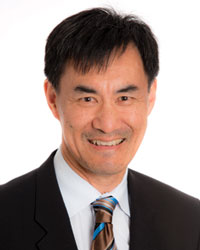
Dr Philip Wong
Gastroenterologist & Hepatologist
09 630 1838
Auckland Region
Electronic Referral on Specialists & Referrals Service
Southern Cross Health Insurance Affiliated Provider for Consultations
nib Health Partner
about Dr Philip Wong
I have:
- Extensive experience in diagnostic and therapeutic upper GI endoscopy (gastroscopy), lower GI endoscopy (colonoscopy), and ERCP.
- Assessment, management and treatment of liver disease, in particular, hepatitis B and C.
- Capsule endoscopy (pillcam).
services
Specialising in all aspects of
- Gastroenterology
- Gastroscopy
- Colonoscopy
- ERCP
- Liver Disease
Endoscopy Performed at
- Endoscopy Auckland, Epsom
- Allevia Endoscopy Ascot, Epsom
- Allevia Endoscopy Ascot North Shore
Southern Cross Affiliated Provider for
Capsule endoscopy, Colonoscopy, Flexible sigmoidoscopy, Gastroscopy
credentials
Qualifications
MB ChB 1984 Auckland; FRACP 1991
Post Fellowship Training
Institute of Liver Studies, King College Hospital, London, UK (1991-94)
Professional Associations
- NZ Society of Gastroenterology
- American Gastroenterology Association
- American Society of Gastrointestinal Endoscopy
- American Association for the Study of Liver Diseases
- Asian Pacific Association for the Study of the Liver
- Auckland Chinese Medical Association
- European Association for the Study of the Liver
gallery
Loading...
contact Dr Philip Wong
021 725 471
Allevia Specialist Ctr, 100 Mountain Rd, Epsom, Auckland
http://www.aucklandgastro.co.nz
EDI: akgastro
Opening Hours
Mon
08:30am - 05:00pm
Tue
08:30am - 05:00pm
Wed
08:30am - 05:00pm
Thu
08:30am - 05:00pm
Fri
08:30am - 05:00pm
Sat
Closed
Sun
Closed
Endoscopy Performed At
Practicing At
Quick Search
Advertisement
Advertisement
Advertisement