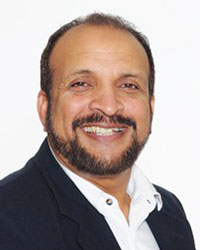
About
Hospitals Practising AtAscot, Mercy, Southern Cross, Ormiston
Other Languages SpokenHindi, Fijian, Urdu
Areas of SpecialisationGeneral Surgery, Endocrine & Laparoscopic work
Qualifications/MembershipsDSM, FRACS 2000
Year of RegistrationSpecialist: 2000
Specialist ExperienceConsultant Surgeon, Counties Manukau DHB - 10 years
Specialist TrainingGeneral Surgery, Endocrine, Bariatric
Current PositionsConsultant Surgeon MMH
Director - Auckland Bariatric Centre
Definitions
Colorectal surgery is used to repair damage to the colon, rectum and anus. Surgery is a vital treatment option for colorectal cancer, ulcerative colitis, Crohn’s disease, and some cases of
diverticulitis, often resulting in reconstruction of the intestinal tract. Other bowel conditions that may require surgery to a lesser extent include haemorrhoids, anal fissures (tears in the lining of the anus), bowel incontinence, and rectal prolapse. Most of these surgeries repair tears, remove blockages, or tighten sphincter muscles. Surgery is also sometimes used to treat pelvic floor disorders, such as perineal hernia and rectocele (bulging of the rectum towards the vagina). Some colorectal conditions or diseases may be treated with minimally invasive surgery, while others will require more complex procedures.moreThe endocrine system consists of several glands (groups of cells), in different parts of the body, which discharge hormones directly into the bloodstream. Hormones have many different important
functions and ways of acting on organs of the body. During endocrine surgery procedures are performed on endocrine glands, usually to increase or decrease hormonal effects in the body. It often involves removing a tumour that has grown on or within an endocrine gland. Common endocrine surgery operations are removal of the thyroid gland located in the neck (thyroidectomy) and removal of the parathyroid glands located near the thyroid gland (parathyroidectomy). More rarely, surgery may remove one or both of the adrenal glands located near the kidneys (adrenalectomy).moreGeneral surgery takes its name from general medicine, and is a surgical specialty focusing on the torso and abdominal organs. This may include the intestines comprising the oesophagus, stomach, small
and large intestines, pancreas, liver, gallbladder and bile ducts. It also often deals with diseases and disorders involving the skin and breasts.moreLaparoscopic surgery, also known as ‘keyhole surgery’, is carried out with the aid of a camera inserted into the abdomen or pelvis. A small incision is made in the abdominal wall through which a
laparoscope, a flexible lighted tube with a camera attached, is inserted so that structures within the abdomen and pelvis can be examined. The abdominal cavity is made more visible by distending it with an absorbable gas, usually carbon dioxide. A number of major and minor surgeries may be carried out. A variety of tubes and long, narrow instruments can be inserted through the same incision in the skin, or via other small incisions, facilitating a number of procedures without the need for a large surgical incision. The surgeon uses these instruments to manipulate, cut and sew tissue. A number of procedures can be performed laparoscopically, including gallbladder removal (laparoscopic cholecystectomy), oesophageal surgery (laparoscopic fundoplication), colon surgery (laparoscopic colectomy), and surgery on the stomach and spleen. Most patients receive general anaesthetic during the procedure.moreThere are three main glands in the mouth that produce saliva: the parotid, submandibular, and sublingual glands. Each of these glands is paired; there is one parotid gland on each side of the head,
in front of the ears. The salivary glands can be affected by various diseases, such as mumps, and tumours can also occur. Most salivary tumours are benign (non-cancerous) and slow-growing, but malignant (cancerous) tumours also occur. Benign tumours are at risk of changing to malignant ones. Surgery usually removes the tumour and the affected part of the particular saliva gland, or the tumour and entire gland, under general anaesthetic.moreThe thyroid gland is located in the lower part of the neck, below the Adam’s apple, wrapped around the trachea (windpipe). It produces hormones which help regulate the heart rate, blood pressure,
body temperature and metabolism (the rate at which food is converted into energy). Thyroid disorders can include an overactive gland, called hyperthyroidism, or an underactive gland, called hypothyroidism. Both can result in an enlarged thyroid gland. Sometimes surgery is required to remove the thyroid gland. A thyroid nodule is a small swelling or lump in the thyroid gland. They are usually examined with imaging such as ultrasound or MRI, and a fine-needle aspiration biopsy, a relatively painless procedure to take tissue fluid samples from the nodule. Thyroid surgery may be required when: the biopsy indicates the nodule is cancerous; the nodules are getting bigger; or the trachea or oesophagus is compressed because the thyroid is very large. Thyroid surgery involves removing part or all of the thyroid gland, under general anaesthesia. Usually, the lobe of the thyroid gland containing the nodule lump is removed. An analysis of tissue will determine if the rest of the thyroid gland should be removed, during the same surgery. (Alternatively, surgery may be done at a later date.)moreA vasectomy is surgery to cut and seal the vasa differentia (singular: vas deferens), the two tubes that carry a man’s sperm from the testes (testicles) in the scrotum to the urethra. The urethra
is the tube that carries sperm and urine out of the penis. After a vasectomy, sperm cannot move out of the testes and form part of the ejaculate. Thus it is an effective method of long-term birth control. Vasectomy is usually done using local anaesthesia. A small cut is made in the upper part of the scrotum, then each vas deferens is cut and sealed. Stitches or a skin glue are normally used to close the wound. You may have a vasectomy without a cut. This is called a no-scalpel vasectomy (NSV). The surgeon finds the vas deferens and then gives you local anaesthetic. A small hole is made in the skin of the scrotum and the vas deferens is pulled through in order to cut and seal it. You will not need stitches. Vasectomy does not affect a man’s ability to have an erection or orgasm, or to ejaculate semen.moreUpper gastrointestinal (GI) surgery involves surgery to the oesophagus, stomach, duodenum, or small intestine, all parts of the gastrointestinal (digestive) tract. This is the tube in which the
movement of muscles and the release of hormones and enzymes carry out the digestion of food. moreA hernia is a sac or pouch of tissue formed by the peritoneum, the lining of the abdominal cavity. The sac protrudes through a hole or weak area in the fascia, the strong layer of the abdominal wall
that surrounds the muscle. Hernias occur in different places: femoral hernia (upper thigh); hiatial hernia (upper part of stomach); incisional hernia (can occur through a scar if you have had abdominal surgery); inguinal hernia (groin); umbilical hernia (around the navel). Surgery under general anaesthetic is used to permanently fix a hernia. The weakened abdominal wall tissue (fascia) is secured and any holes are closed. An umbilical hernia that fails to heal on its own by the time a child is five years old may be repaired. Emergency surgery for hernias is sometimes needed. In addition to open surgery, some hernias can be repaired using a laparoscope (flexible lighted tube tipped with a camera), which is less invasive.more