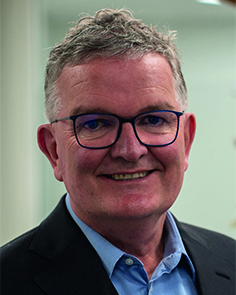
Mr Haemish Crawford
Orthopaedic Surgeon
about Mr Haemish Crawford
Mr. Haemish Crawford has specialized in hip arthroscopy since 1999 and has helped pioneer this procedure in New Zealand. He has presented papers at conferences on the technique and is very active in continuing research in both clinical outcomes of this procedure and basic science.
Dr Crawford is a "cradle to grave" hip surgeon who has a paediatric orthopaedic position at the Starship Childrens Hospital and performs his adult arthroscopy and joint replacement surgery at the Allevia Hospital Ascot in Auckland. He has post graduate fellowship training in sports surgery and joint replacement and revision surgery from the University of Western Ontario, Canada (1997- 1998) and paediatric surgery at University of Iowa, USA (1998 - 1999).
Dr Crawford has performed over 350 hip arthroscopies and the procedures carried out are:
- Femoroacetabular impingement correction ( CAM and Pincer excision and labral repair)
- Microfracture for articular cartilage damage
- Labral repair
- Removal of loose bodies ( fracture fragments, synovial chondromatosis ….)
- Diagnostic (occasionally, and preop assessment before osteotomy)
- Reshaping femoral head (Perthes disease, SUFE …)
services
Mr. Haemish Crawford is a Hip & Knee Surgeon skilled in all aspects of Orthopaedic Surgery. His orthopaedic services include:
- Surgical Opinions and Evaluations
- Treatment of Sports Injuries to the Hip & Knee
- Arthroscopic Surgery
- Robotic assisted Hip & Knee Joint Replacements / Revisions
- Hip & Knee Arthroscopic Surgery
- Surgical Treatment of Arthritis
- Direct Anterior Hip Joint Replacement
credentials
Qualifications
MBChB, FRACS
Hospitals Practising at
Allevia, Columba at Ascot
Consulting at
Warkworth Medical Centre
contact Mr Haemish Crawford
09 520 9636
021 321 351
90 Greenlane East, Remuera, Auckland
Private Bag 28912, Remuera, Auckland 1541
http://www.haemishcrawford.co.nz
EDI: akbonejs