

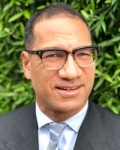


About Mr Janus Schaumkel
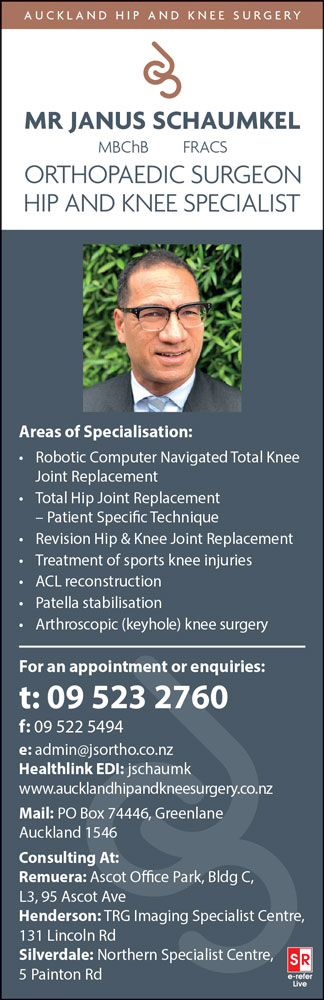
Janus is an experienced New Zealand trained orthopaedic surgeon, specialising in:
- Robotic Computer Navigated Total Knee Joint Replacement
- Total Hip Joint Replacement - Patient Specific Technique
- Revision Hip & Knee Joint Replacement
- Treatment of sports knee injuries
- ACL reconstruction
- Patella stabilisation
- Arthroscopic (keyhole) knee surgery
After returning from subspecialist training in the UK and Australia, he now has 14 years of experience in fulltime private practice, and has modern consulting rooms conveniently based in Greenlane, central Auckland.
Because he also consults at other clinics in greater Auckland, and being in fulltime private practice, means that he is more available for his patients, and that his patients have more flexibility to be seen when, and where, it suits them.
Janus utilises modern surgical techniques, in combination with advanced anaesthetic care and patient specific post-operative rehabilitation. Janus is currently interested in using the latest technology with state-of-the-art robotic computer-assisted knee replacement surgery, in order to improve the outcomes and benefit for his patients.
He is married with three teenaged children. He is also proud of his Tongan/German heritage and sees himself as a role model for young Pasifika people.
Janus is very personable and likes to take the time to learn and understand exactly what the patients problem is, and what their goals of treatment are. He will individualise the care and surgical treatment for each patient to optimise their care, in order to get the best result for them.
Operating privately from Ascot and Brightside Hospitals, Janus is an Affiliated Provider with Southern Cross Insurance and NIB.
Appointments available at:
- Greenlane: Ascot Office Park, Level 3, 95C Ascot Ave
- Henderson: TRG, 131 Lincoln Rd
- Silverdale: Northern Specialist Centre, 5 Painton Rd
Disability Access
Services
Areas of Specialisation
- Robotic Total Knee Joint Replacement
- Total Hip Joint Replacement - Patient Specific Technique
- ACL reconstruction
- Patella stabilisation
- Arthroscopic (keyhole) knee surgery
- Treatment of sports knee injuries
- Revision Hip & Knee Joint Replacement
Total Hip and Knee Joint Replacements
Charges
Please contact my rooms Ph 09-523-2760.
Credentials
Qualifications
MBChB 1997, FRACS (Ortho) 2005
Hospitals Practising at
Brightside Hospital, Ascot Hospital
Referral Info
By Appointment Only
ACC patients: Require a referral from their primary health provider (GP/Physio), with an approved ACC Claim number.
Private insurance/Self funding patients: No referral is needed.
Gallery
Contact Mr Janus Schaumkel
Ph: 09 523 2760