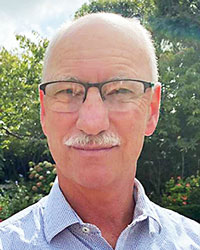
About
Areas of SpecialisationAll areas of Orthopaedic Surgery, with special interest in Joint Replacement Surgery & Surgery of the Knee & Shoulder
Qualifications/MembershipsMBChB (Otago) 1984, FRACS 1993 (Orthopaedics), Member NZ Orthopaedic Assn, FRACS
Categories
- Shoulder Surgery
- Hip Surgery
- Knee Surgery
- Orthopaedic Surgery
Definitions
The head of the femur (thigh bone) meets with the pelvis at the acetabulum, forming the ‘ball and socket’ of the hip joint. The bone surfaces of the hip joint can become worn with age and
disease. Hip surgery includes hip resurfacing, and total hip replacement. With hip resurfacing the damaged joint surface is removed and replaced with artificial surfaces, usually metal or ceramic. With hip replacement surgery the diseased ball and socket of the hip joint are completely removed and replaced with artificial materials. Hip fracture surgery is performed to repair a fracture in the femur near the hip joint. Depending on the location of the break, special screws or a metal plate and screws are inserted to hold the bones in their correct position. If there is concern that the hip may not heal well a partial hip replacement (hemiarthroplasty) may be performed. Hemiarthroplasty replaces the ball part of the hip joint.moreKnee surgery includes knee replacement surgery or arthroplasty, to remove part or all of a damaged or diseased knee joint. In general, the surgery consists of replacing the joint surfaces with
artificial components. This may be done with open surgery under general or regional anaesthetic. Knee arthroscopy is common and less invasive. It involves small incisions being made on the knee through which is inserted a flexible instrument with a camera attached (arthroscope). This allows examination of the joint, diagnosis of problems and, in some cases, various repairs to damaged tissue, ligaments and some bone fractures.moreOrthopaedic surgery is concerned with treating conditions involving the musculoskeletal system, which is made up of bones, joints, ligaments, tendons and muscles. Orthopaedic surgeons use both
surgical and non-surgical methods to treat a wide range of problems, including trauma (injury), sports injuries, degenerative diseases (e.g. arthritis), infections, tumours and congenital disorders (those present at birth). Various procedures to treat the knee, shoulder and hip are among the most commonly performed surgery.moreShoulder surgery commonly involves arthroscopy, a procedure that uses a thin tube with a camera at its tip (an arthroscope) to help examine and repair the cartilage, bones, tendons and ligaments
inside or around the shoulder joint (known as ‘keyhole surgery’). The arthroscope is inserted through a small incision in the skin, with surgical instruments inserted through other incisions. The procedure is performed with general anaesthesia. Surgery may be required to treat various shoulder problems, including: a torn or damaged labrum (cartilage ring) or ligaments; shoulder instability, where the shoulder joint is loose and slides around too much or becomes dislocated; a torn or damaged biceps tendon; a torn rotator cuff (the group of muscles and tendons that cover the shoulder joint, assisting its movement); a bone spur or inflammation around the rotator cuff; inflammation or damaged lining of the joint; arthritis of the end of the clavicle (collarbone); loose tissue that needs to be removed; and shoulder impingement syndrome, to make more room for the shoulder to move around. Open surgery may be needed if the damage is more severe.more